Description

Bus booking Software
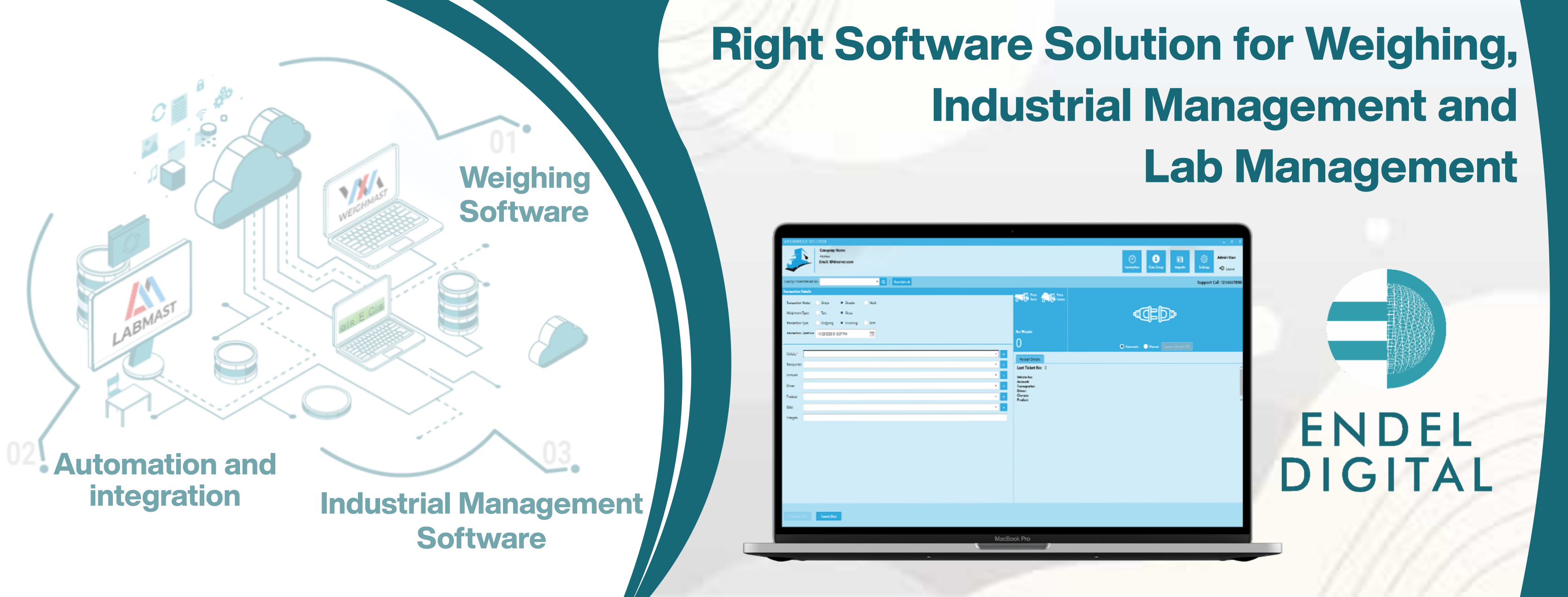
WeighMAST
Comprehensive Overview: Bus booking Software vs WeighMAST
As of my last update in October 2023, I don't have specific information on a bus booking software called "WeighMAST." It's possible that it could be a new or niche product that has emerged after my last training data in October 2021, or that it has not achieved significant market recognition to be widely documented or described in the sources available to me. However, I can still offer a general outline of what typically characterizes bus booking software solutions, as well as some guidance on how to analyze such products in the context you're interested in.
a) Primary Functions and Target Markets of Typical Bus Booking Software:
Primary Functions:
- Online Ticket Booking: Allows users to search for and book bus tickets online through a user-friendly interface.
- Real-time Seat Availability: Provides up-to-date information on available seats.
- Route Listings and Scheduling: Offers detailed route information, scheduling options, and time management features.
- Payment Processing: Facilitates secure online payment transactions.
- Ticket Management: Manages ticket issuance, cancellations, and modifications.
- User Accounts and Profiles: Enables users to create accounts to manage bookings and view travel history.
- Mobile Accessibility: Often includes mobile app support for ease of booking on smartphones.
- Fleet Management: For operators, tools to manage and track vehicle fleets.
- Analytics and Reporting: Provides data analysis and reports for better decision making.
- Customer Support Integration: Tools for providing customer service and support, including chat and email functions.
Target Markets:
- Public Transport Operators: Municipal or private operators offering regular routes.
- Tour Companies: Companies offering chartered buses for tours and events.
- Corporate Clients: Businesses needing employee transportation services.
- End Consumers: Daily commuters, travelers, and tourists.
b) Overall Market Share and User Base:
As I don't have specific data on WeighMAST's market share or user base, general observations about the bus booking software landscape may include:
- Market Share: The market is typically dominated by well-established players with comprehensive software solutions that cater to large operators and small to medium enterprises alike.
- User Base: Most popular bus booking software platforms have thousands to millions of users, including a mix of B2B users (like transport and tour operators) and B2C users (individual travelers).
c) Key Differentiating Factors Between Bus Booking Software Products:
When comparing bus booking software products, the key differentiators usually include:
- Feature Set: The range and depth of features offered, from basic ticketing to advanced analytics and fleet management.
- User Experience: The quality and intuitiveness of the user interface, including mobile app performance.
- Pricing Model: Whether the software offers flexible pricing plans that can accommodate small operators and scale to larger operations.
- Customization Capabilities: The ability to customize the software to meet specific operational requirements.
- Integration with Other Systems: How well the software integrates with other systems like CRM, payment gateways, and GPS for fleet tracking.
- Customer Support and Service: The quality and availability of customer support, including live assistance and documentation.
- Scalability: The software's ability to handle an increasing number of users and transactions as a business grows.
- Security Features: Robust security measures to protect transaction and personal data.
To get accurate data and insights about WeighMAST or similar software, you might consider:
- Checking official company resources.
- Looking at industry reports or software review sites.
- Engaging with user forums and testimonials for recent user experiences.
If WeighMAST has emerged as a significant player in the market, such sources could provide the most updated and specific insights.
Contact Info
Year founded :
Not Available
Not Available
Not Available
Not Available
Not Available
Year founded :
Not Available
Not Available
Not Available
Not Available
Not Available
Feature Similarity Breakdown: Bus booking Software, WeighMAST
To provide a detailed feature similarity breakdown for bus booking software, using WeighMAST as a case study, it is important to first note that "WeighMAST" appears to not directly align with bus booking software but seems more related to a different industry perhaps related to weighing systems. However, assuming WeighMAST is a hypothetical bus booking software, let’s proceed:
a) Core Features in Common:
Most bus booking software solutions generally include the following core features:
-
Booking Management: This includes the ability to create, modify, and cancel reservations. Users can select dates, times, and routes.
-
Schedule Management: The software often allows for the creation and management of bus schedules, including departures and arrivals.
-
Passenger Management: This includes maintaining a database of passengers with details like contact information and booking history.
-
Payment Processing: Integration with various payment gateways for handling online transactions securely.
-
Seat Management: The ability to choose specific seats and see seat availability, often through a visual interface.
-
Notifications and Alerts: Automated SMS or email reminders for confirmations, cancellations, or changes in travel plans.
-
Reporting and Analytics: Tools to analyze data related to bookings, revenue, and user behavior for business insights.
b) User Interface Comparison:
While it's challenging to specify exact interface designs without direct access to both products, general comparisons can be drawn based on common market offerings:
- Design and Usability: Most modern bus booking software follows a user-friendly UI/UX design principle, featuring clean layouts and intuitive navigation. Critical pathways like booking or making a payment are typically emphasized to streamline the user experience.
- Mobile Optimization: Responsive design for viewing and interacting with the software on mobile devices is often essential, and both would likely offer mobile apps or mobile-friendly web interfaces.
- Dashboard Complexity: Depending on the specific target audience (e.g., consumers vs. operators), the dashboard complexity can vary—with consumer-facing dashboards being simpler and operator dashboards offering more detailed control and insights.
c) Unique Features:
While many bus booking systems share similar core functionalities, some unique features can distinguish one from another:
-
WeighMAST's Potential Edge: If WeighMAST includes unique integration with weighing or inventory systems (suggested by its name), this could provide additional logistical features not found in traditional bus booking software.
-
Advanced Route Optimization: Some systems offer complex AI-driven route optimization features that adjust schedules or suggest routes based on real-time traffic data and demand.
-
Custom Branding: The ability to offer white-label solutions where businesses can brand the software as their own might be a unique selling point.
-
Multi-Modal Transportation Options: Features that integrate offerings for different types of transportation (e.g., bus, rail, ferry) within the same booking interface could set a product apart.
In conclusion, while there will be many overlapping features in bus booking software solutions, a product can distinguish itself through unique integrations, enhanced user interfaces, or specialized features geared towards specific business processes or industries.
Features
Not Available
Not Available
Best Fit Use Cases: Bus booking Software, WeighMAST
Bus booking software like WeighMAST is designed to streamline and automate the process of managing bus reservations, bookings, and related logistics. Here's how it can be beneficial across different scenarios and business types:
a) For what types of businesses or projects is Bus booking Software the best choice?
-
Travel Agencies and Tour Operators: Companies specializing in arranging group travel or tours can benefit greatly. The software can help manage bookings, itineraries, and payments efficiently.
-
Public and Private Transport Operators: Bus companies that provide regular routes can use bus booking software to manage seat availability, passenger records, and scheduling.
-
School and Educational Institutions: For managing school bus fleets, ensuring student safety, and optimizing routes.
-
Corporate Shuttle Services: Companies providing employee transportation as part of their operations can manage routes, schedules, and monitor occupancy effectively.
-
Event Organizers: For events like conferences, festivals, or sporting events where transportation of attendees is required.
b) In what scenarios would WeighMAST be the preferred option?
-
Complex Fleet Management Needs: If a company needs to manage a large fleet of buses with multiple routes and schedules, WeighMAST can offer robust scheduling and management tools.
-
Integration Requirements: Businesses needing to integrate booking systems with other software solutions, such as accounting or CRM systems.
-
Demand for Real-time Data and Analytics: Companies that require real-time updates and data analytics to enhance decision-making processes.
-
User-friendly Interfaces and Customization: Situations where ease-of-use and customization options are critical for both the company and its customers for a seamless booking experience.
c) How do these products cater to different industry verticals or company sizes?
-
Industry Verticals:
- Transportation: By providing end-to-end solutions from booking to billing.
- Tourism: Offering features tailored for itinerary planning and package management.
- Education: Ensuring safety and accountability through tracking and route optimization.
- Corporate Services: Enhancing employee satisfaction with efficient and reliable transport.
-
Company Sizes:
- Small to Medium Enterprises (SMEs): Provides cost-effective solutions with basic booking functionalities.
- Large Enterprises: Offers scalable solutions with advanced analytics, multiple user roles, and comprehensive reporting.
WeighMAST, with its versatile features, can cater to a wide range of business needs and can be configured to suit the specific requirements of different industries and company sizes, making it an attractive choice in the bus booking software market.
Pricing
Pricing Not Available
Pricing Not Available
Metrics History
Metrics History
Comparing undefined across companies
Conclusion & Final Verdict: Bus booking Software vs WeighMAST
In assessing the overall value and suitability of Bus booking Software and WeighMAST, it is crucial to consider each product's strengths, weaknesses, and the specific needs of the user.
a) Best Overall Value
Determining the best overall value between Bus booking Software and WeighMAST depends largely on the specific requirements of the user. If the user's primary need is managing reservations, passenger data, and scheduling for a transportation company, the Bus booking Software would offer the best value due to its domain-specific features. However, if the requirement is for a system focused on weighing, logistics, and inventory management, WeighMAST would likely provide better value.
b) Pros and Cons
Bus Booking Software
-
Pros:
- Optimized for transportation and reservation management.
- Features such as real-time seat availability, multiple payment gateway integrations, and customer notifications.
- Customizable to fit the specific needs of different transport service providers.
-
Cons:
- Limited scope outside of booking and scheduling, potentially lacking features for financial or logistics management.
- Integration with other non-transportation systems might require additional customization and cost.
WeighMAST
- Pros:
- Designed to handle complex weighing and inventory tasks, ideal for logistics, manufacturing, or industries that require precise weight management.
- Offers robust reporting tools and seamless integration with supply chain and ERP systems.
- Cons:
- Might be overly complex for users who only need basic booking functions without logistics or inventory components.
- Potentially higher costs if solely utilized for transportation scheduling tasks, due to features that are unnecessary for a booking-centric operation.
c) Recommendations for Users
For users attempting to decide between Bus booking Software and WeighMAST, it is recommended to:
-
Conduct a Needs Analysis: Evaluate the core requirements of your operations. If your primary needs revolve around scheduling and booking, Bus booking Software is likely more appropriate. If your needs include managing inventories or handling logistics, WeighMAST is more suitable.
-
Consider Integration Needs: If your company requires integration with other systems (like accounting software or ERP systems), assess which software offers better compatibility and integration capabilities.
-
Evaluate Future Scalability: Consider potential future needs. If there's potential for your operations to expand into logistics, WeighMAST might provide a better long-term investment.
-
Cost and ROI Assessment: Analyze the costs involved with both systems, including implementation, training, and ongoing maintenance, against the projected return on investment (ROI).
After careful consideration of these factors, users can make a more informed decision that best meets the current and future demands of their operational environment.
Add to compare
Add similar companies