Description
Advanced Just Eat clone

Clouddish
Comprehensive Overview: Advanced Just Eat clone vs Clouddish
When considering platforms like Clouddish, Dinlr Waiter, and an advanced Just Eat clone, it's important to look at their primary functions, target markets, market share, user base, and differentiating factors. Since these platforms are designed for the food service industry or food delivery sector, they aim to enhance operational efficiency, provide better service, and facilitate food ordering.
a) Primary Functions and Target Markets
-
Advanced Just Eat Clone:
- Primary Functions: The key functions include online food ordering, restaurant management, user account management, payment gateway integration, real-time tracking, and customer reviews. The system usually also has options for promotional campaigns, loyalty programs, and customer support.
- Target Market: Restaurants, cafes, and food delivery businesses looking to establish an online presence or improve their existing delivery services.
-
Clouddish:
- Primary Functions: Clouddish typically offers cloud-based restaurant management solutions. Functions may include table reservation, billing, inventory management, staff management, and analytics.
- Target Market: Small to large restaurants, cafes, and other dining establishments that need comprehensive management tools for both front-end and back-end operations.
-
Dinlr Waiter:
- Primary Functions: The core functions focus on order management for restaurant wait staff, allowing them to take orders digitally, send orders directly to the kitchen, manage tables, and process payments.
- Target Market: Dine-in restaurants looking to streamline their ordering process, improve table turnover rates, and provide enhanced service efficiency.
b) Market Share and User Base
-
Advanced Just Eat Clone: Since this term refers to a range of customizable scripts that emulate the features of Just Eat, market share and user base can vary widely. Just Eat being a well-established platform, clones may cater to emerging markets where localized or niche food delivery services are developing.
-
Clouddish: As a specialized restaurant management software, Clouddish's market share would depend largely on the regions and categories of restaurants it successfully penetrates. It's typically more dominant in markets where cloud-based solutions are in demand.
-
Dinlr Waiter: This platform would have a stronger presence in metropolitan areas or regions with a higher number of dine-in restaurants. The user base generally consists of wait staff and restaurant managers focused on enhancing in-house processes.
c) Key Differentiating Factors
-
Advanced Just Eat Clone:
- Customization Flexibility: These clones offer high customizability, allowing businesses to tailor the platform to their specific needs, a major advantage over more rigid platforms.
- Direct Competitor: Often competes directly with established food delivery platforms, offering competitive pricing structures and feature set comparable to larger players like Just Eat or Uber Eats.
-
Clouddish:
- Comprehensive Management System: Offers a wide range of management functionalities, making it more suitable for restaurants looking to handle every aspect of their business through a single platform.
- Focus on Analytics: Emphasizes data insights and analytics to help restaurants optimize operations and track performance metrics.
-
Dinlr Waiter:
- In-House Efficiency: Specifically designed for enhancing the efficiency and speed of in-house dining operations.
- User-Friendly for Staff: Features are focused on simplicity and ease of use for the waitstaff, often integrating seamlessly with other POS systems to provide a holistic in-restaurant solution.
Overall, each platform serves specific niches within the food service industry, with their success depending on their ability to meet the diverse needs of their respective target markets. Clouddish and Dinlr Waiter focus more on internal restaurant management and operations, while Just Eat clones are outward-facing, focusing on consumer interactions and logistics.
Contact Info
Year founded :
Not Available
Not Available
Not Available
Not Available
Not Available
Year founded :
Not Available
Not Available
Not Available
Not Available
Not Available
Feature Similarity Breakdown: Advanced Just Eat clone, Clouddish
When comparing advanced food delivery and restaurant management platforms like a Just Eat clone, Clouddish, and Dinlr Waiter, it's important to evaluate them across several dimensions: core features, user interfaces, and unique features. Below is a breakdown:
a) Core Features in Common
-
Order Management:
- All platforms provide comprehensive order management tools, allowing restaurants to manage incoming orders efficiently and track their progress from preparation to delivery or pickup.
-
Menu Management:
- Each platform offers menu management capabilities, enabling restaurants to update, modify, and display their offerings to customers easily.
-
Payment Processing:
- Secure payment gateways are integrated for handling transactions, including support for multiple payment methods such as credit/debit cards and digital wallets.
-
Customer Management:
- These platforms include features to manage customer information, order history, and preferences, often integrating CRM elements for better service.
-
Analytics and Reporting:
- Detailed reports and analytics are provided to help restaurants understand their performance, sales trends, and customer behaviors.
-
Table Reservation:
- Although more common in systems designed for eat-in facilities, options for table reservation and management are usually present.
-
Multi-language and Multi-currency Support:
- Essential for platforms operating in diverse markets, offering localization to cater to different regions.
b) User Interfaces Comparison
-
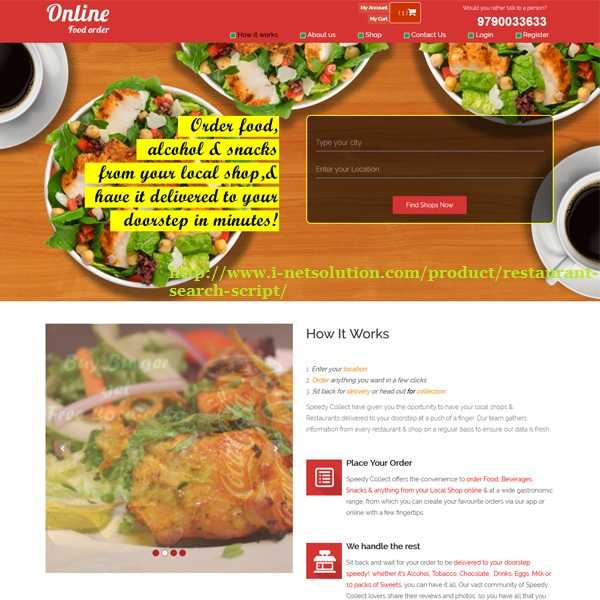
Just Eat Clone: Typically features a consumer-friendly interface focused on the end-user experience. It's designed for simplicity to facilitate quick browsing and ordering from a wide range of options.
-
Clouddish: Offers a sleek, modern UI with both end-user and restaurant management in mind. The dashboard for restaurants is feature-rich yet intuitive, allowing easy navigation through complex functionalities.
-
Dinlr Waiter: Focuses on a more operational interface as it’s oriented towards in-restaurant management. The UI is streamlined for waiters and kitchen staff, emphasizing order taking and processing efficiency on mobile or tablet devices.
c) Unique Features
-
Just Eat Clone:
- Often includes a broad marketplace feature, allowing customers to search a wide range of restaurants and cuisines, sometimes with integrated delivery fleet services.
- Advanced search and filtering options to ease the discovery of restaurants and menu items.
-
Clouddish:
- May offer cloud-based kitchen display systems (KDS) for seamless integration and efficiency across various restaurant locations.
- More advanced AI-driven analytics for anticipating customer preferences and peak times.
-
Dinlr Waiter:
- Strong emphasis on in-house dining experiences, with features like split billing, order modifications on-the-go, and synchronization with kitchen displays in real-time.
- Highly customizable for individual restaurants, with options to integrate with existing systems like POS and inventory directly.
Each product leverages core functionalities essential to modern food service operations but differentiates through specific focuses, such as comprehensive delivery marketplaces, sophisticated CRM and analytic tools, or enhanced in-dining experience management. The choice between these platforms would largely depend on the specific needs of a business, whether that's focusing more on online orders and delivery, detailed analytics, or optimizing the in-house dining process.
Features
Not Available
Not Available
Best Fit Use Cases: Advanced Just Eat clone, Clouddish
When evaluating Advanced Just Eat clone, Clouddish, and Dinlr Waiter, it's important to understand how each caters to different business needs and industry verticals. Here's a breakdown of their best fit use cases:
a) Advanced Just Eat Clone
-
Best Fit for:
- Food Delivery Startups: Ideal for businesses looking to replicate the success of Just Eat by providing an online platform for food delivery services.
- Multi-Restaurant Platforms: Suitable for marketplaces aiming to aggregate multiple restaurants, allowing customers to choose from various cuisines and delivery options.
- Franchises and Chains: Chain restaurants seeking to expand their delivery services across multiple locations can benefit from a centralized platform.
-
Business Types:
- New entrants into the online food delivery market.
- Existing offline restaurants that want to go digital.
- entrepreneurs looking to quickly launch a competitive food delivery service.
b) Clouddish
-
Best Fit for:
- Restaurant Management Systems: Perfect for restaurants that need comprehensive management capabilities, including POS integration, inventory management, and order processing.
- Cloud-Based Solutions: Suitable for businesses that prefer leveraging cloud technology for real-time updates and data access from anywhere.
-
Use Scenarios:
- Restaurants seeking end-to-end digital transformation.
- Eateries wanting to streamline operations from inventory to billing and customer management.
- Multi-location restaurant groups aiming to centralize management systems and data.
-
Industry Vertical:
- Best suited for small to mid-sized restaurants that want to integrate technology to improve operational efficiency.
c) Dinlr Waiter
-
Best Fit for:
- Table-Side Order Taking: Essential for restaurants focused on enhancing the dining experience by equipping waitstaff with tools to take orders directly at the table.
- Quick Service Restaurants (QSRs): Effective in environments where speed and efficiency of service are crucial.
-
Use Scenarios:
- Establishments that face high turnover and need a simple, intuitive interface for order processing.
- Dining services looking to reduce errors and improve order accuracy with digital tools.
-
Industry Vertical:
- Suitable for small cafes, casual dining experiences, and fast-casual restaurants focused on enhancing service quality.
d) Catering to Different Industry Verticals or Company Sizes
-
Advanced Just Eat Clone: Serves predominantly the food delivery industry and is scalable, making it applicable for both startups and established enterprises looking to expand their delivery operations.
-
Clouddish: Focuses on restaurant management across various tiers, from small individual restaurants to multi-location chains, supporting operations in both casual and fine dining establishments.
-
Dinlr Waiter: Primarily benefits smaller operations and quick service restaurants. Ideal for businesses looking to modernize the in-restaurant experience without overhauling their entire management system.
Each product addresses specific needs within the food services sector, effectively filling different niches based on operational focus, company size, and desired customer experience enhancements.
Pricing
Pricing Not Available
Pricing Not Available
Metrics History
Metrics History
Comparing undefined across companies
Conclusion & Final Verdict: Advanced Just Eat clone vs Clouddish
To conclude and provide a final verdict for the comparison of Advanced Just Eat clone, Clouddish, and Dinlr Waiter, we will evaluate overall value, discuss pros and cons, and offer recommendations for users trying to decide between these three products.
a) Which product offers the best overall value?
Advanced Just Eat Clone - This platform is designed specifically for launching food delivery services, offering a customizable and comprehensive solution that aligns closely with Just Eat's model. It provides a balance of essential features such as menu management, order tracking, and delivery logistics. Its robust set of features can cater effectively to various business needs, but it might require some technical know-how or investment to fully customize and manage it.
Clouddish - Designed for scalability and ease of use, Clouddish offers a versatile range of features including order management, analytics, and an integrated payment system. It is particularly appealing for businesses looking for an all-in-one solution that requires minimal time to set up and offers cloud-based flexibility. This platform is popular for its affordability and ease of integration into existing infrastructures.
Dinlr Waiter - Focused more on enhancing customer interaction and in-house dining, Dinlr Waiter emphasizes point-of-sale features and table-side ordering. While it excels in environments like restaurants and cafes, it might not be as suitable for delivery-focused businesses. Its value is best realized in enhancing on-premises dining experiences rather than extensive delivery services.
Based on overall value in the context of food delivery and restaurant management, Clouddish offers the best value. It combines ease of use, a broad set of features, and scalability, making it suitable for a wide range of restaurant and food service operations.
b) Pros and cons of each product
Advanced Just Eat Clone
- Pros: Highly customizable, robust feature set for launching delivery services, proven model based on a successful platform.
- Cons: May require technical expertise for customization, potentially higher initial setup costs, limited flexibility if modifications are not straightforward.
Clouddish
- Pros: Easy to set up and use, scalable, cost-effective for startups and small to medium-sized businesses, seamless integration capabilities.
- Cons: May not have as specialized features for large, complex operations, some limitations in on-premises dining management.
Dinlr Waiter
- Pros: Excellent for improving customer interaction and service efficiency in dining settings, strong POS and order management features.
- Cons: Less suited for businesses focused on delivery, might entail redundant features for delivery-centric operations, not as feature-rich for delivery logistics.
c) Recommendations for users deciding between Advanced Just Eat clone, Clouddish, and Dinlr Waiter
-
For businesses primarily focused on delivery and wanting a reliable, proven platform: Opt for the Advanced Just Eat Clone, especially if you have the resources to invest in customization and technical setup.
-
For businesses looking for an all-rounded, scalable, and budget-friendly solution: Choose Clouddish. It provides a good balance of features and ease of integration, ideal for both growing and established restaurants looking for cloud-based solutions.
-
For restaurants or cafes prioritizing dine-in experiences and POS solutions over delivery: Dinlr Waiter is the best choice. Its strengths lie in improving service efficiency and customer satisfaction on-premises.
Ultimately, the decision should be based on your core business needs, budget, and desired features. Consider piloting the platforms if possible to determine which offers the best interface and feature alignment with your business objectives.
Add to compare
Add similar companies